Cat behavior and body language: how to read your cat
Read a cat as a whole, not one signal at a time. A tail held straight up with relaxed, forward ears is a friendly greeting; flattened ears, wide pupils and a crouched body mean fear; a swishing or thumping tail means frustration or agitation. Purring usually means contentment in a relaxed cat, but cats also purr when stressed or in pain, so context matters.
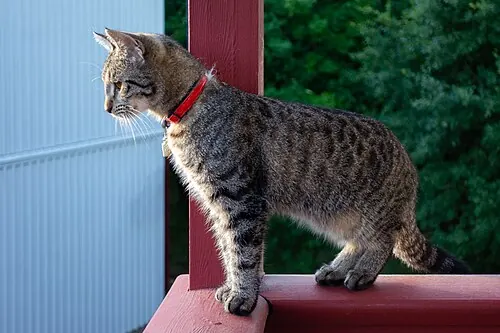
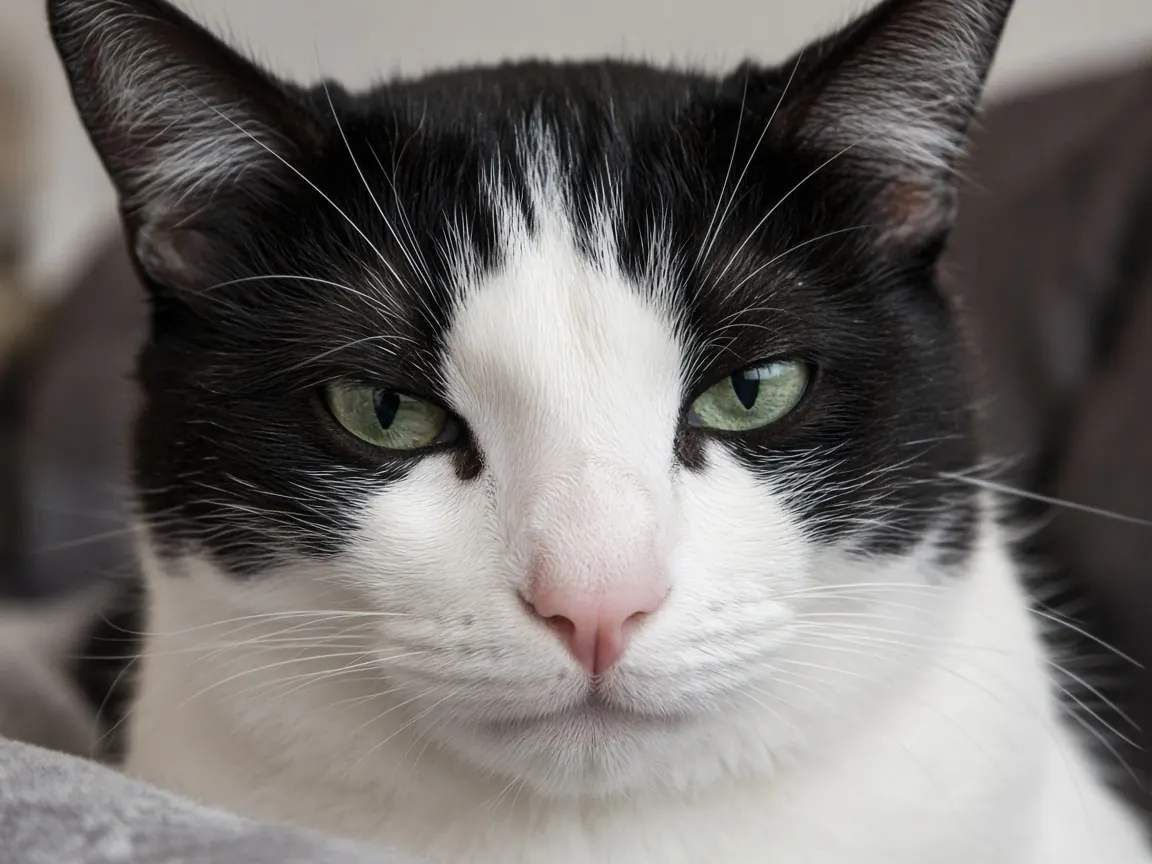
Quick guide to cat body language
| Signal | Usually means | What to do |
|---|---|---|
| Tail straight up, ears forward, relaxed whiskers | Friendly greeting | Offer a hand to sniff; let the cat rub against you. |
| Slow blink, eyes half closed | Relaxed, positive state | Slow blink back (see why cats slow blink). |
| Ears turned out to the sides or twitching | Nervous, or alert and gathering information | Give space and watch other signals. |
| Ears flattened, pupils wide, body low | Fear or anxiety | Do not touch; let the cat retreat to a hiding place. |
| Ears rotated back, tail swishing or thumping | Frustration or agitation | Stop petting or playing and step back. |
| Tail tucked or wrapped tight around the body | Anxiety or fear | Reduce noise and handling; provide a safe spot. |
| Bushy tail, arched back, sideways stance | "Stay away" warning | Back off; separate cats calmly without picking them up. |
| Hunched posture, squinting, hiding, less grooming | Possible pain or illness | Book a vet check. |
Why do cats purr?
Cats purr when they are relaxed and content, and also to ask for attention. But they can purr in stressful situations, such as at the vet, and some purr when they are in pain. Cats Protection advises judging a purr by the cat's body language and the situation: a purring cat that is hunched, hiding or not eating may be unwell. How cats make the sound, and the special purr they use to ask for food, are covered in why do cats purr?
Do cats know their names?
Most pet cats do. In a 2019 study in Scientific Reports, household cats reacted more to their own name than to similar sounding everyday words, even when a stranger said it. They usually show it with an ear flick or a turn of the head rather than by coming over, so a cat that ignores you has often heard you perfectly well. Read the details in do cats know their names?
Do cats love their owners?
Most do, in their own way. A 2019 study in Current Biology found about two thirds of kittens and adult cats were securely attached to their owner, close to the rate in human babies, though a 2015 study found adult cats rarely lean on their owner for comfort in a strange place. Read the evidence in do cats love their owners?
Why do cats meow at humans?
Adult pet cats meow mainly at people, not at other cats. Domestic meows are shorter and higher pitched than African wild cat cries, and listeners rate them as more pleasant (Nicastro 2004). Meows pull attention more than they carry fixed word meanings; owners who know their cat do better at reading them (Nicastro and Owren 2003). Details in why do cats meow at humans?
Why do cats like boxes?
A box is a ready made hiding place, and hiding is how cats cope with new or uncertain situations. In a 2014 shelter study, newly arrived cats given a hiding box had lower stress scores by day 3 and 4 than cats without one (Vinke et al. 2014), and a 2007 study found hide boxes did not make shelter cats less likely to be adopted. Cats will even sit inside an illusory square outline on the floor. Details in why do cats like boxes?
Are cats left or right pawed?
Most adult cats favor one paw for tricky tasks such as fishing a treat from a jar, but overall the split between left and right is close to even. Female cats tend to use the right paw and males the left (Wells and Millsopp 2009; McDowell, Wells and Hepper 2018). Details in are cats left or right pawed?.
Why do cats eat grass?
Plant eating is normal: in UC Davis owner surveys 65 percent of cats ate plants weekly, and about 9 in 10 looked well beforehand (Hart et al. 2021). Grass eating is recorded in 95 wild carnivore species, and one theory is that it helps expel intestinal worms. Details in why do cats eat grass?
Why do cats like catnip?
Catnip and silver vine trigger licking, chewing, cheek rubbing and rolling. A 2021 study found the silver vine compound nepetalactol raises beta endorphin in cats, and that rubbing coats the face and head in a chemical that repels mosquitoes (Uenoyama et al. 2021). About one in three cats does not respond to catnip, but most of those respond to silver vine (Bol et al. 2017). Details in why do cats like catnip?
Where do cats like to be petted?
Most cats respond best to touch on the cheeks, the base of the ears and, for some, under the chin. In a 2015 stroking study the base of the tail drew the most negative responses (Ellis et al. 2015), and when Battersea visitors followed simple "choice, attention, touch" guidelines, shelter cats were friendlier and showed less aggression (Haywood et al. 2021). Details in where do cats like to be petted?.
Kneading, rubbing and head bunting
Kneading (treading with the front paws) is a behavior kittens use while nursing, to help stimulate milk flow, and many adult cats keep doing it when relaxed on something soft. A 2024 ethogram of the domestic cat classes it as a juvenile behavior retained into adulthood and directed at people; the fuller research, including when kneading combined with fabric sucking is worth a vet visit, is in why do cats knead?. Rubbing the cheeks, head and body against people and objects deposits scent from glands on the face. It marks familiar things and, between cats that get along, helps share a group scent. That is one reason the AAFP and ISFM guidelines advise respecting a cat's scent marks rather than cleaning them all away.
Scratching
Scratching is normal, necessary behavior. It keeps the claws in condition, stretches the body and leaves both a visible mark and a scent mark. Cats who scratch furniture usually need a better option nearby: a sturdy, tall post placed where they already scratch. See cat care basics.
Hunting, play and "attacks" on feet
Cats are predators, and play is how they practice stalking and pouncing. A cat without enough play often redirects it onto moving hands and feet. Use wand toys rather than your hands, schedule several short play sessions a day, and end each one with a catch. Food puzzles add a foraging challenge to meal times.
If your cat hunts outdoors, a 2021 trial found a high meat protein, grain free food cut prey brought home by 36 percent and 5 to 10 minutes of daily object play by 25 percent, while bright collar covers cut birds by 42 percent (Cecchetti et al. 2021). Evidence on bells is mixed. Details in how do I stop my cat hunting?.
Stress and multi cat homes
Cats often do not show social stress openly. People assume cats get along because they eat or sleep near each other, but the AAFP and ISFM guidelines note that many cats simply time share a single set of resources. Signs of tension include blocking doorways, staring, hiding, overgrooming and toileting outside the box. The fix is usually more resources in more places: extra litter boxes, feeding stations, water bowls, high perches and hiding spots, so no cat has to pass another to reach what it needs.
Peeing or pooping outside the litter box
House soiling is one of the most common reasons cats are given up, and it nearly always has a fixable cause. Start with a vet visit, because urinary tract disease, arthritis, kidney disease and other medical problems often show up this way. Then check the litter box set up: enough boxes, big enough, clean, in quiet places, with a litter the cat likes (see how many litter boxes). Clean soiled spots with an enzymatic cleaner, and never punish a cat for it, which adds stress and makes the problem worse.
Cat behavior FAQ
What does it mean when a cat's tail is straight up?
A tail held vertically as a cat approaches is a friendly greeting signal, usually seen with forward ears and relaxed whiskers.
Does purring always mean a cat is happy?
No. Cats purr when content, but also when stressed, for example at the vet, and sometimes when in pain. Look at the rest of the body language and the situation.
Why does my cat knead me?
Kneading is a behavior kittens use while nursing, to help milk flow, and many adult cats keep doing it when they are relaxed and comfortable on something soft, including a person's lap. Details in why do cats knead?
Why does my cat eat grass?
It is a common, usually normal habit, likely inherited from wild ancestors. Most cats look well before eating plants. See why do cats eat grass?.
Why do cats roll in catnip?
The scent triggers a natural opioid reward, and the rubbing transfers plant chemicals that repel mosquitoes onto the fur. See why do cats like catnip?.
Why does my cat love boxes?
Boxes give cats a safe, enclosed place to hide and watch from, which helps them settle; shelter studies found hiding boxes lowered stress in new arrivals. See why do cats like boxes?.
Do cats have a dominant paw?
Many do: about 7 in 10 adult cats consistently use one paw to reach for food, usually settling on it by their first birthday. See are cats left or right pawed?.
Why does my cat meow at me?
Adult cats mainly meow to get human attention. The call was shaped by domestication and by learning what works with you; it is not a fixed word dictionary. See why do cats meow at humans?.
How can I stop my cat bringing home birds and mice?
In a 2021 controlled trial, a high meat protein food reduced prey brought home by 36 percent and daily play by 25 percent; bright collar covers protected birds but not mammals. See how do I stop my cat hunting?.
Where do cats like to be petted?
Mostly on the head: cheeks, base of the ears and sometimes the chin. The base of the tail and the tummy are the areas most cats like least. See where do cats like to be petted?.
Why has my cat started peeing outside the litter box?
Rule out medical causes first with a vet visit, since urinary disease, arthritis and other illnesses commonly cause it. Then review the number, size, cleanliness, location and litter of the boxes. A cat straining with little or no urine needs emergency care.
Sources
- International Cat Care: Cat communication
- Cats Protection: Cat body language
- Cats Protection: Signs of pain
- Humphrey T. et al. (2020) The role of cat eye narrowing movements in cat to human communication. Scientific Reports 10:16503
- Vitale K.R., Behnke A.C., Udell M.A.R. (2019) Attachment bonds between domestic cats and humans. Current Biology 29(18):R864 to R865
- Saito A. et al. (2019) Domestic cats (Felis catus) discriminate their names from other words. Scientific Reports 9:5394
- Ellis S.L.H. et al. (2013) AAFP and ISFM Feline Environmental Needs Guidelines
- Nicastro N. (2004) Perceptual and acoustic evidence for species-level differences in meow vocalizations by domestic cats. Journal of Comparative Psychology 118(3):287 to 296
- Vinke C.M., Godijn L.M., van der Leij W.J.R. (2014) Will a hiding box provide stress reduction for shelter cats? Applied Animal Behaviour Science 160:86 to 93
- McComb K. et al. (2009) The cry embedded within the purr. Current Biology 19(13):R507 to R508
- Carney H.C. et al. (2014) AAFP and ISFM Guidelines for Diagnosing and Solving House Soiling Behavior in Cats
- Cornell Feline Health Center: Feline Behavior Problems: House Soiling
Cite this page
Students and teachers are welcome to cite this page. Add your access date if your teacher or style guide asks for one.
APA (7th ed.)
MeowWise. (2026, November 18). Cat behavior and body language: how to read your cat. https://meowwise.com/behavior.html
MLA (9th ed.)
“Cat behavior and body language: how to read your cat.” MeowWise, 18 Nov. 2026, meowwise.com/behavior.html.
Chicago (bibliography)
MeowWise. “Cat behavior and body language: how to read your cat.” Last modified November 18, 2026. https://meowwise.com/behavior.html.
General education, not veterinary advice. If you are worried about your cat, contact your veterinarian; in an emergency, go to the nearest emergency vet.