Cat nutrition: what to feed your cat and what to avoid
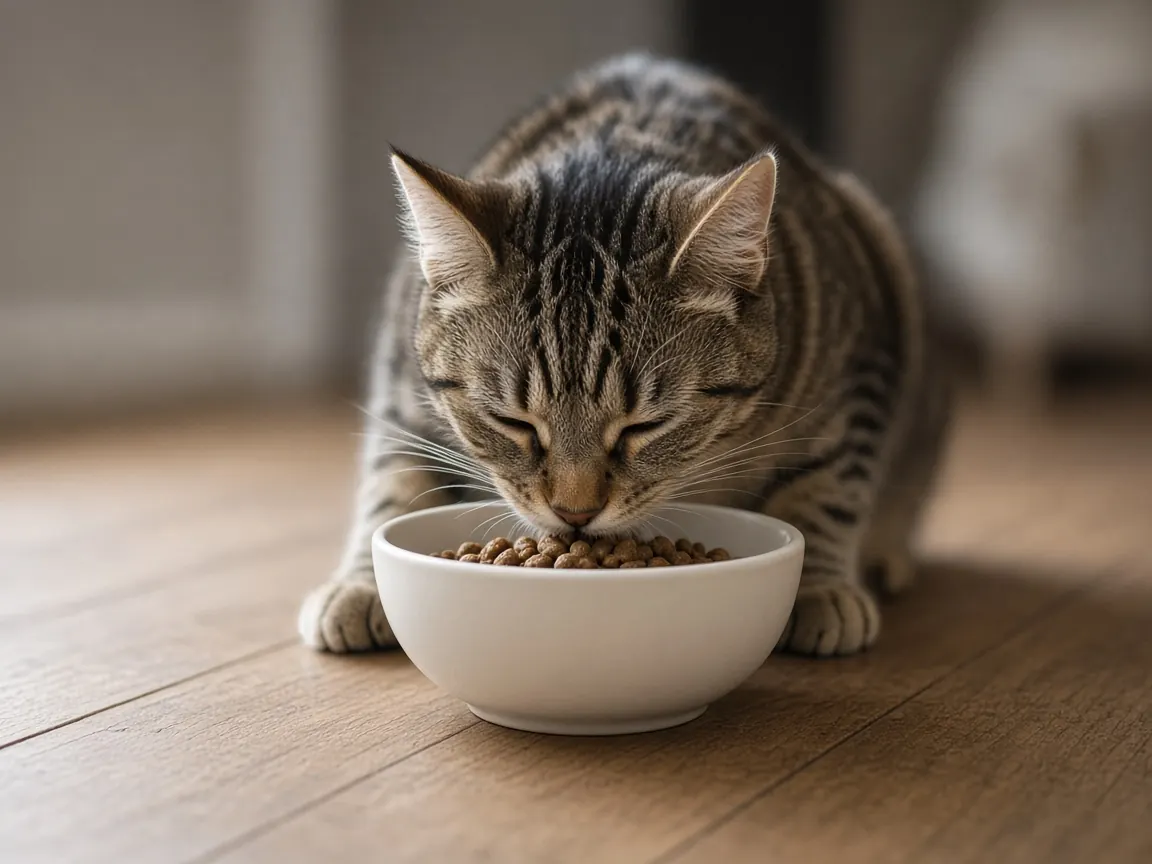
Cats are obligate carnivores: they rely on nutrients found only in animal products, and need a diet high in protein, moderate in fat and low in carbohydrate. The simplest safe choice is a commercial food labeled complete and balanced for your cat's life stage, fed in measured amounts, with fresh water always available. Treats should stay under 10 to 15% of daily calories.
What cats need
Cornell Feline Health Center describes cats as obligate carnivores that evolved eating prey high in protein, moderate in fat and minimal in carbohydrate. Beyond that, they need more than a dozen specific nutrients, including vitamins, minerals, fatty acids and amino acids. Taurine is the classic example: in 1987, researchers showed that low taurine caused a serious, reversible heart disease (dilated cardiomyopathy) in cats, and pet food makers then raised taurine levels. It is one reason a cat should never live on dog food or an unbalanced homemade diet.
More is not better. Supplements are usually unnecessary on a complete and balanced diet and can be harmful; give them only on your vet's advice.
What cats can taste
Cats cannot taste sweetness, and savory (umami) is the taste that draws them to food. A 2005 study found the cat Tas1r2 gene, half of the mammal sweet receptor, is a broken pseudogene, so cats neither seek out nor avoid sugar. A 2023 study found the cat umami receptor responds most to nucleotides found in meat and fish, boosted by amino acids. That is one more reason sugary human treats do nothing for a cat. Full details in can cats taste sweet?
Wet vs dry food
| Dry | Canned (wet) | |
|---|---|---|
| Water content | About 6 to 10% | At least 75%, a useful source of water |
| Cost | Usually cheaper | Usually the most expensive |
| Palatability | Often less appealing to cats | Highly palatable for most cats |
| Storage | Keep in an airtight container and check the expiry date; nutrients and fats degrade over time | Refrigerate opened cans |
Both can be complete and balanced. Cornell's view is that once a food meets nutritional standards, choosing wet, dry or a mix is largely down to what your cat prefers. Many owners use some wet food to add water to the diet, which your vet may recommend for cats with urinary or kidney problems.
How to choose a food
- Look for the nutritional adequacy statement (in the US, the AAFCO statement) saying the food is complete and balanced, and for which life stage: growth (kittens), adult maintenance, or all life stages.
- Check the ingredient list: ingredients are listed by weight, so meat, poultry or fish should appear among the first few.
- Be cautious with raw diets. Cornell does not recommend them because they can carry bacteria, viruses and parasites that infect cats and people, without a proven health benefit.
- Homemade diets are hard to balance. Use one only if a veterinary nutritionist formulates it.
- Offer some variety. Cornell suggests feeding two or three different cat foods can help prevent a cat becoming fixated on a single food.
How much to feed and healthy weight
Needs vary widely between cats, so treat the feeding guide on the bag as a starting point and adjust by body condition. Vets use a body condition score, often on a 9 point scale where 5 is ideal: you should be able to feel the ribs under a slight fat covering and see a waist behind them. Cornell calls obesity the most common nutrition related problem in cats; it raises the risk of arthritis and diabetes. WSAVA publishes free body condition charts you can use at home. Ask your vet to set a target weight before cutting food, because a cat that stops eating can become seriously ill.
How cats drink, and helping them drink more
Cats lap by touching only the top of the curled tongue tip to the water and pulling a column of water up, about four laps a second (Reis et al. 2010). Small studies found fountains made little or no difference to how much cats drank (Grant 2010; Robbins et al. 2019), while wetter food raised total fluid intake and diluted urine (Buckley et al. 2011). Details in how do cats drink water?.
Feeding for a happy cat
The AAFP feeding consensus statement (Sadek et al., 2018) recommends feeding that respects natural behavior: several small meals rather than one bowl, food puzzles and foraging toys, and feeding cats individually in quiet places away from litter boxes and other cats. Start puzzles easy so the cat succeeds. Keep fresh water available at all times and away from food bowls.
Foods that are dangerous for cats
- Onions, garlic and chives (including powders): damage red blood cells and can cause anemia. The ASPCA notes cats are more susceptible than dogs.
- Chocolate, coffee and caffeine: can cause vomiting, abnormal heart rhythms, tremors and seizures. Dark and baking chocolate are the worst.
- Grapes and raisins: on Cornell's list of human foods that can seriously harm cats.
- Xylitol (in sugar free gum and some sweets): listed by Cornell as a danger.
- Alcohol and raw yeast dough.
- Milk and dairy: many cats are lactose intolerant and get diarrhea; milk is not needed after weaning.
- Raw meat, raw eggs and bones: risk of Salmonella, E. coli and, for raw meat, toxoplasmosis.
- Canned fish meant for people as a main diet: Cornell notes some cats fed this way developed serious neurological problems.
If your cat eats something toxic, call your vet or an animal poison control service straight away. See common poisons.
Cat nutrition FAQ
Is wet or dry food better for cats?
Both can be complete and balanced. Wet food is at least 75% water and usually more palatable; dry food is cheaper and keeps longer. Many owners feed a mix. Your vet may advise more wet food for cats with urinary or kidney disease.
Can cats be vegetarian or vegan?
Cats are obligate carnivores that rely on nutrients found only in animal products, such as taurine, so a vegetarian or vegan diet risks serious deficiencies. Do not change to one without guidance from a veterinary nutritionist.
Can cats drink milk?
Not as a treat. Many cats are lactose intolerant and get diarrhea or stomach upset from dairy. Water is all an adult cat needs to drink.
Do water fountains help cats drink more?
Not reliably. Two small studies found no significant difference in urine concentration or overall intake between fountains and bowls; wetter food made a bigger difference. See how do cats drink water?
Can cats taste sweet food?
No. Cats lack a working sweet taste receptor because the Tas1r2 gene is broken, so sugar adds calories without any taste reward. Their main appetitive taste is umami. See can cats taste sweet?
How many treats can I give my cat?
Cornell's rule of thumb is that treats should not exceed 10 to 15% of a cat's daily calories.
Sources
- Cornell Feline Health Center: Feeding Your Cat
- Pion P.D. et al. (1987) Myocardial failure in cats associated with low plasma taurine: a reversible cardiomyopathy. Science 237:764 to 768
- Sadek T. et al. (2018) Feline feeding programs: addressing behavioural needs to improve feline health and wellbeing. J Feline Med Surg
- ASPCA: People foods to avoid feeding your pets
- Cornell Feline Health Center: Poisons
- Li X. et al. (2005) Pseudogenization of a sweet-receptor gene accounts for cats' indifference toward sugar. PLoS Genetics 1(1):e3
- McGrane S.J. et al. (2023) Umami taste perception and preferences of the domestic cat (Felis catus), an obligate carnivore. Chemical Senses 48:bjad026
- WSAVA Global Nutrition Guidelines and body condition score tools
Cite this page
Students and teachers are welcome to cite this page. Add your access date if your teacher or style guide asks for one.
APA (7th ed.)
MeowWise. (2026, November 18). Cat nutrition: what to feed your cat and what to avoid. https://meowwise.com/nutrition.html
MLA (9th ed.)
“Cat nutrition: what to feed your cat and what to avoid.” MeowWise, 18 Nov. 2026, meowwise.com/nutrition.html.
Chicago (bibliography)
MeowWise. “Cat nutrition: what to feed your cat and what to avoid.” Last modified November 18, 2026. https://meowwise.com/nutrition.html.
General education, not veterinary advice. If you are worried about your cat, contact your veterinarian; in an emergency, go to the nearest emergency vet.