What are cat whiskers for?
Cat whiskers are touch sensors. Their scientific name is vibrissae. Each whisker sits in a deep follicle packed with nerves, so even a tiny bend sends a signal to the brain. Cats use them to feel their surroundings up close, especially in dim light and when an object is too near the face to see clearly.
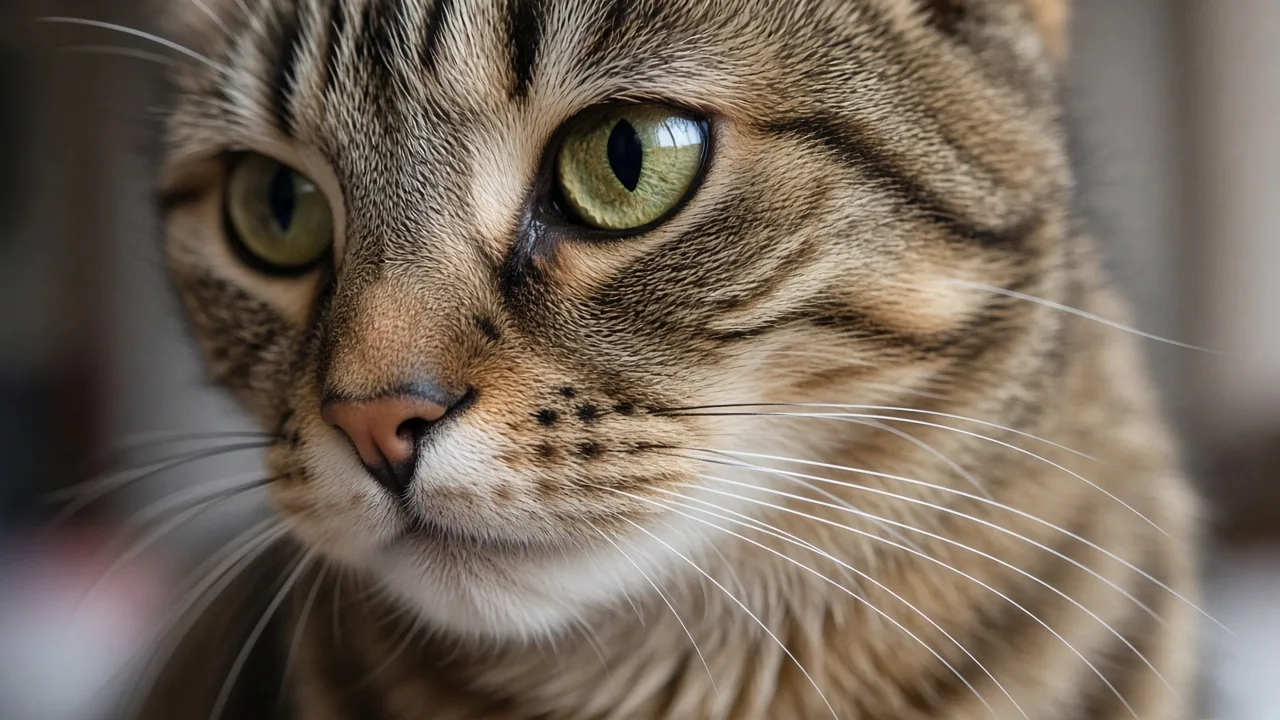
Whiskers are not ordinary hairs
Whiskers are thicker and stiffer than coat hair, and they are rooted much more deeply. In a 1986 review of research on vibrissae in many mammals, Alma Ahl described them as specialized tactile hairs whose follicles are surrounded by a blood filled sinus and supplied with many nerve endings. That design turns the whisker into a lever: a light touch at the tip is amplified at the root, where the nerves pick it up (Ahl, 1986).
Where cats have whiskers
- On the muzzle. The long rows on each side of the nose are the ones most people notice.
- Above the eyes. These help trigger a protective blink when something brushes near the eye.
- On the chin and the backs of the front legs. The leg whiskers help a cat feel prey it is holding.
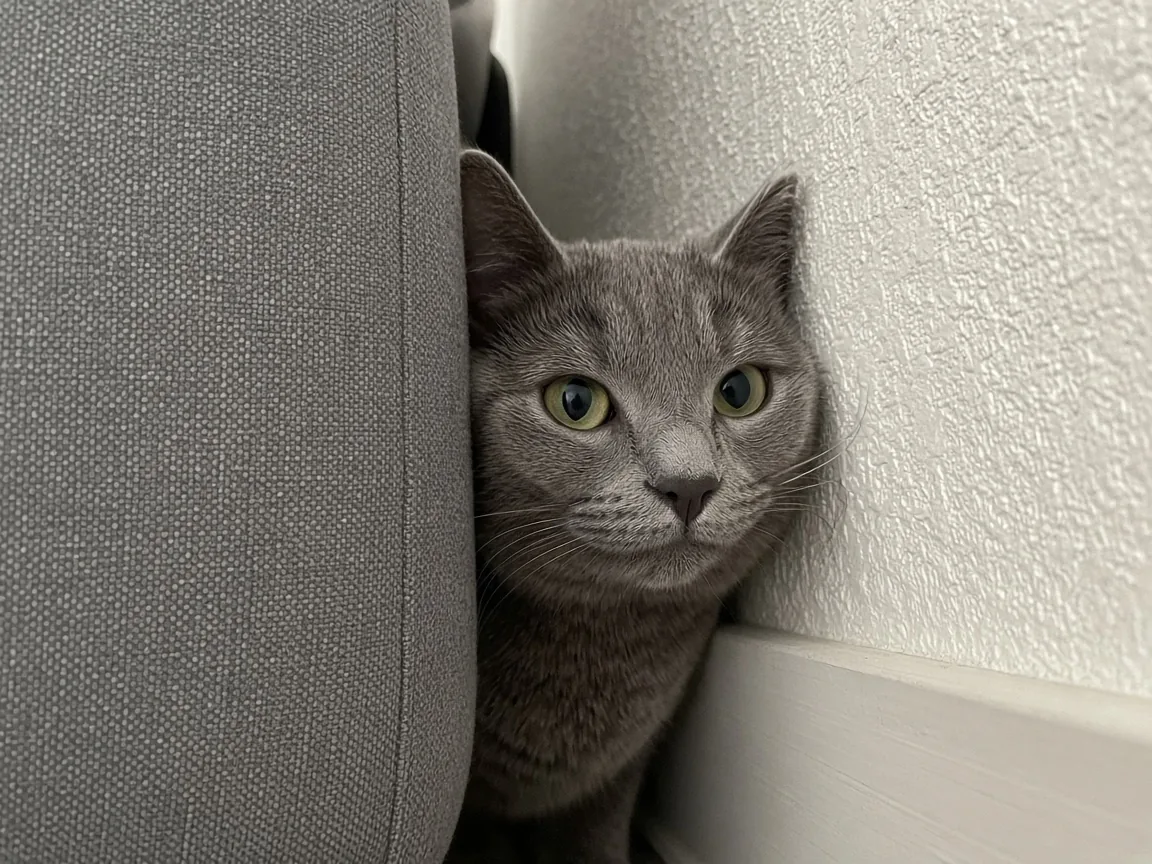
What cats use whiskers for
Ahl's review brought together studies showing that animals use vibrissae to explore and locate objects, to move through tight or dark spaces, and during hunting and feeding. In cats, the muzzle whiskers can swing forward when a cat is close to something it is investigating, which helps make up for the fact that cats cannot focus well on objects right under the nose.
Whiskers also act as body language. Relaxed whiskers sit out to the side. Whiskers pulled back flat against the face often go with fear or defensiveness, while whiskers pushed forward usually mean interest. Read them together with the ears, tail and posture; our cat behavior guide explains the full picture.
Should you ever trim a cat's whiskers?
No. Whiskers are sense organs, so cutting them takes away information your cat relies on. They are not painful to touch, but avoid pulling or bending them. It is normal for a cat to shed an old whisker now and then, and a new one grows in its place. If your cat is losing many whiskers at once, or has broken whiskers with sore or itchy skin, ask your vet. See our cat care guide for everyday grooming.
Cat whisker FAQ
Do cat whiskers grow back?
Yes. Whiskers shed and regrow naturally, a few at a time.
Do whiskers help cats see in the dark?
Not directly, but they let a cat feel nearby objects and air movement when there is too little light to see well (Ahl, 1986).
Is it OK to cut a cat's whiskers?
No. Whiskers are touch sensors, and trimming them removes useful information about the world around your cat.
Why are my cat's whiskers flat against its face?
Whiskers pulled back often go with fear or defensiveness. Check the rest of the body language and give your cat space.
Sources
Cite this page
Students and teachers are welcome to cite this page. Add your access date if your teacher or style guide asks for one.
APA (7th ed.)
MeowWise. (2026, November 18). What are cat whiskers for? https://meowwise.com/blog/what-are-cat-whiskers-for.html
MLA (9th ed.)
“What are cat whiskers for?” MeowWise, 18 Nov. 2026, meowwise.com/blog/what-are-cat-whiskers-for.html.
Chicago (bibliography)
MeowWise. “What are cat whiskers for?” Last modified November 18, 2026. https://meowwise.com/blog/what-are-cat-whiskers-for.html.
General education, not veterinary advice. If you are worried about your cat, contact your veterinarian; in an emergency, go to the nearest emergency vet.